Iran Conflict Member Hub
Conflict in the Middle East is driving unprecedented volatility in New Zealand’s transport sector.
National Road Carriers Association (NRC) is ensuring your business has the tools to deal with this situation and your voice is heard by the Government.
ADVOCACY
NRC is providing industry intelligence to Finance Minister Nicola Willis and the Ministerial Economic Security Group through our membership of the Freight Advisory Group.
We need your boots-on-the-ground data to inform the Government’s response. Please send any feedback regarding business or operational impacts directly to the NRC team.
Latest Updates
Current fuel stock:
The latest update shows national fuel stocks remain stable with sufficient stock levels across petrol, diesel and jet fuel. Stocks for petrol and diesel are lower and stocks for jet fuel have increased since the previous update. Movements remain within expectations and show normal patterns.
Current fuel stocks as at 11:59PM Wednesday 13 May (as days’ cover).
| Stock | Number of ships | Petrol | Diesel | Jet fuel |
|---|---|---|---|---|
| In-country | 30.6 | 19.9 | 27.1 | |
| On water within EEZ (up to 2 days away) | 4 | 7.1 | 9.6 | 7.6 |
| On water outside EEZ (up to 3 weeks away) | 8 | 18.5 | 16.8 | 13.0 |
| Total NZ stock* | 12 | 56.2 | 46.3 | 47.7 |
*Totals may not sum due to rounding.
Data will next be updated on the afternoon of Wednesday 20 May.
Previous fuel stock:
Previously reported fuel stocks as at 11:59PM Sunday 10 May (as days’ cover).
| Stock | Number of ships | Petrol | Diesel | Jet fuel |
|---|---|---|---|---|
| In-country | 29.6 | 22.3 | 28.4 | |
| On water within EEZ (up to 2 days away) | 2 | 5.1 | 1.6 | 1.2 |
| On water outside EEZ (up to 3 weeks away) | 10 | 24.3 | 21.3 | 20.6 |
| Total NZ stock* | 12 | 59.0 | 45.2 | 50.2 |
*Totals may not sum due to rounding.
Further detail:
MBIE receives twice-weekly updates from fuel importers. This data is cross-checked against shipping information and aggregated to protect commercial confidentiality.
Shipping
Fuel companies reported there were 10 fuel ships on the water as at 11:59 pm Sunday 3 May, either within New Zealand’s Exclusive Economic Zone (EEZ) (up to two days away) or outside the EEZ (up to three weeks away).
Some vessel movements can be viewed through publicly available Automatic Identification System (AIS) ship-tracking services. These are generally most reliable when vessels are operating in or near coastal waters, where ground-based receivers provide stronger coverage and ships are closer to ports. Further offshore, AIS coverage relies on satellite data, which can be delayed or intermittent and is often restricted or unavailable in free or open-source tracking services.
As a result, free ship-tracking tools usually only display vessels close to shore and may show limited information, such as only the next port of call (for example Fiji), even where this is just a stopover on the way to New Zealand. AIS data also does not confirm a vessel’s cargo, and reported routes and timings can change due to weather, port congestion, or loading and unloading requirements. While helpful as a reference, publicly available AIS data does not provide a complete, consistent, or verified picture of fuel supply movements.
On water within EEZ
- Gem Emerald
- Maersk Crete
- Sea Orca
- STI Virtus
On water outside EEZ
- Chang Hang Fei Yue
- Chang Hang Kai Tuo
- Esteem Discovery
- Hafnia Mikala
- High Mariner
- Pacific Sunstone
- Sea Odyssey
- Stena Convoy
It is important to remember that this is a snapshot at a point in time. Ships are usually on the move and shipping schedules can change frequently due to weather, port congestion and the time it takes to load and unload fuel.
MBIE does not publish ship level consignment details because fuel importers have told us this is commercially sensitive and provided in confidence. Protecting this confidentiality ensures we continue to get the most detailed system-wide information possible. This allows us to monitor the fuel supply as New Zealanders expect.
Days’ cover
The average daily fuel demand used by MBIE to calculate days of cover is:
- 8.1 million litres of petrol
- 10.7 million litres of diesel
- 4.8 million litres of jet fuel
The Exclusive Economic Zone (EEZ)
The Exclusive Economic Zone is a boundary that extends 200 nautical miles (370.4 km) off the coast.
On water within EEZ
Fuel is being unloaded from ships, on board ships at berth but not yet unloading, or on ships moving between ports or entering the EEZ from international waters.
On water outside EEZ
Fuel on ships that have left their port of origin but not yet entered New Zealand waters.
Commercial disclaimer
MBIE endeavours, to the best of its knowledge and ability, to ensure the data is accurate. However, MBIE does not warrant that the data is current, accurate, or complete. The data may be changed, deleted, added to, or otherwise amended at any time as new information becomes available.
New Zealand is continuing to closely monitor the impacts of the conflict in the Middle East on global fuel markets. While this is a fast-moving situation internationally, fuel supply into New Zealand remains stable, and onshore and incoming stocks are sufficient. There is currently no need for New Zealanders to change how they buy fuel.
It is important to remember that fuel supply is inherently dynamic, with stock levels fluctuating week-to-week as fuel is consumed and new shipments arrive. Changes in stock levels reflect normal patterns rather than supply disruption.
Fuel importers manage their imports in line with demand and minimum stockholding obligations. Fuel companies are providing immediate updates to officials if they are made aware of disrupted supply, and there have been on reports of material issues with future shipments.
International events can create uncertainty, but New Zealand’s fuel supply system is designed to operate reliably under a range of global conditions. In the short term, New Zealanders can be confident that we have the fuel we need to keep people, goods and essential services moving.
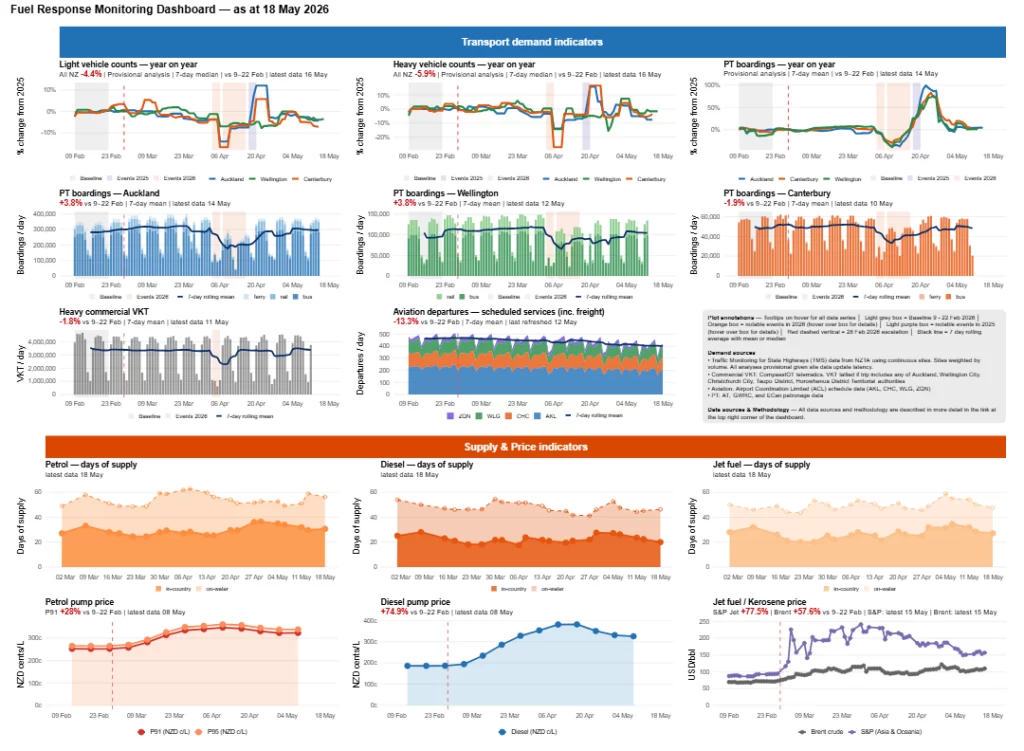
Ministry of Transport – latest Fuel Response Monitoring Dashboard
National Fuel Response Plan
The Fuel Response Plan 2026 provides a structured, four-phase framework to manage risks to New Zealand’s fuel security (petrol, diesel, and jet fuel). It scales from routine monitoring to strict emergency controls. We are currently in Phase One
The Four Phases of Response
| Phase | Market Condition | Government Action | Public Guidance |
| 1. Watchful | Market is effective; prices may be rising. | Monitor stocks; publish updates; coordinate with industry. | Use fuel as normal; stay informed via MBIE/EECA. |
| 2.Precautionary | Market is effective, but signs of supply disruption appear. | Shore up supply; review fuel-use regulations; public sector demand reduction. | Consider combining trips; follow fuel-saving tips. |
| 3. Managed* | Supply is tight; intervention required. | Prioritize life-preserving services; implement purchase limits. | Follow limits; rely on prioritized essential services. |
| 4. Protected* | Major or sustained supply disruption. | Strictly direct fuel distribution; formal rules for fair sharing. | Use service stations only as directed; focus on essentials. |
*Phases 3 and 4 are currently under consultation.
Security Alert - Protecting your fleet & fuel
With the rising cost of fuel across the country, we have received reports of trucks being specifically targeted while parked up. Opportunistic theft is on the rise, and unfortunately, this trend is expected to continue as fuel prices remain high.
We urge all members to be extra vigilant with their vehicles and parking choices. To minimise the risk to your fleet, please consider the following security measures:
Secure Parking: Whenever possible, park in well-lit, fenced, or monitored areas rather than leaving vehicles in isolated or dark locations.
Physical Deterrents: Ensure all fuel caps are locked and consider installing anti-siphoning devices or fuel alarms.
Driver Awareness: Remind your teams to perform a quick visual check of their fuel tanks and seals before starting their shift.
Report Activity: If you notice any suspicious behavior around your depot or parked vehicles, please report it to the authorities immediately.
Protecting your assets is more critical than ever. Let’s work together to keep our industry moving safely.
in the news
The Platform – Simplified Fuel Rationing
ONE News – National Fuel Plan Update
NZ Herald (requires premium subscription to read) – Diesel price surge: Freight firms add fuel surcharges as costs jump 80%
Beehive.govt.nz – Fuel Stocks Remain Healthy
TVNZ Q&A – Interview with Nicola Willis
Radio New Zealand – Interview with Nicola Willis
1News (lead story watch from 1m30s) – TVNZ+
NewstalkZB (listen on Sunday 8 Mar at 6am – Week on Demand – NewstalkZB
KiwiRail Freight Capacity
KiwiRail Freight Capacity can be found at the below link:
KiwiRail Freight Capacity Link
Commerce Commission
Fuel price monitoring – Middle East conflict
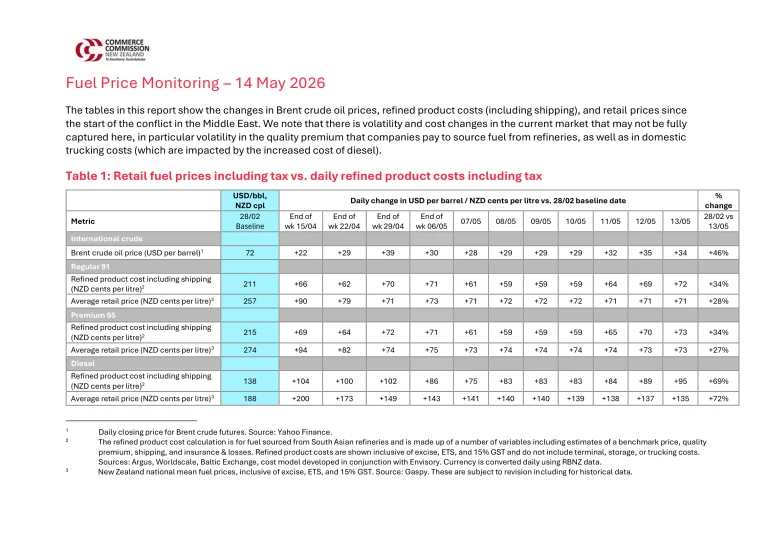
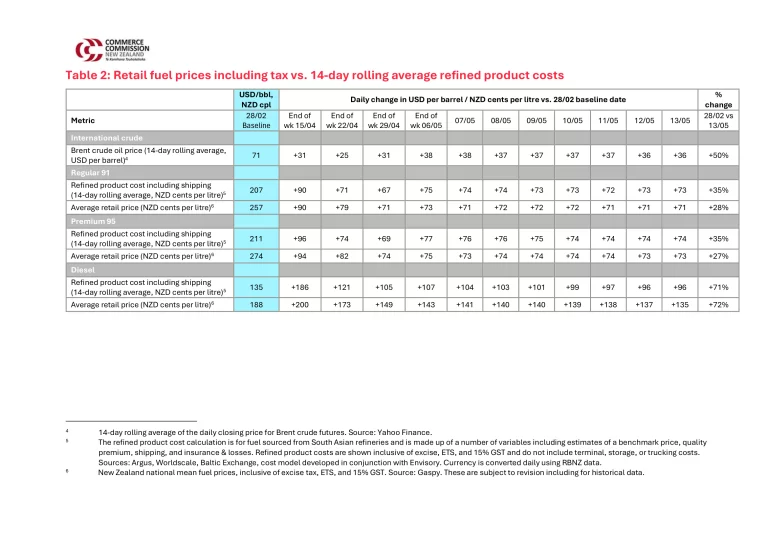
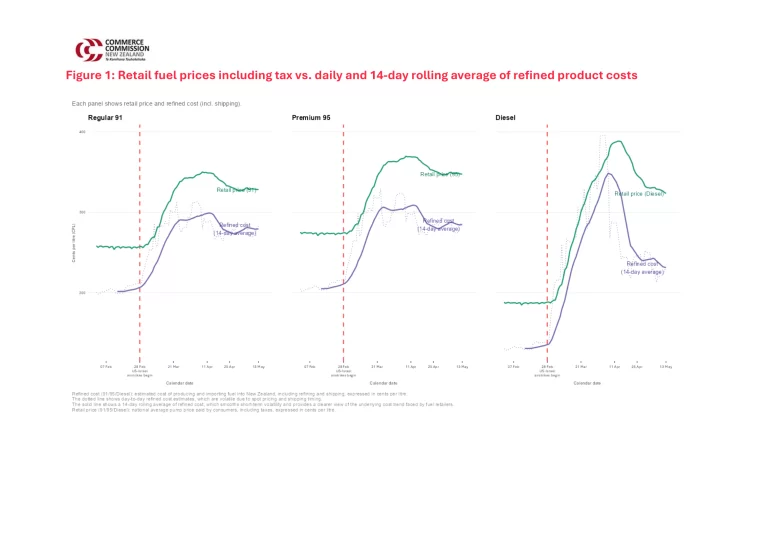
The Commission is publishing regular fuel price monitoring reports in response to the conflict in the Middle East and the impact on global fuel prices.
7 May 2026: Our analysis to 6 May shows that retail prices for all three fuel types have been relatively stable over the last week. Refined product costs have shown less day-to-day volatility compared to March and early April, but remain higher than before the conflict. The gap between costs and retail prices for petrol continues towards pre-conflict levels, while Diesel is currently larger, which we will continue to monitor.
ComCom Fuel Price Monitoring
member resources
Fuel Discounts: Access highly competitive rates through our partners Z Energy and Mobil. Pricing is updated every Tuesday (Z Energy) and Saturday (Mobil).
Mobil gives a fuel discount off their national list price of 29 cents per litre of diesel and 12 cents per litre of petrol to NRC members at all Mobil Service Stations and Truck Stops, also at some non-branded sites including selected Waitomo and Allied Petroleum locations.
Z Energy offers a discount off their national price of 26.25 cents per litre of diesel at Truck Stops, and 10 cents per litre of diesel and petrol at Z, Caltex and Challenge Service Stations.
Z are also offering a $200 fuel credit to NRC members who open a new Z Business fuel card by 30 April 2026
Fuel Adjustment Factor (FAF) Calculator: Use our professional mechanism to pass on short-term fuel fluctuations to customers fairly.
FAF Calculator
Member Guidance on Fuel Adjustment Factors
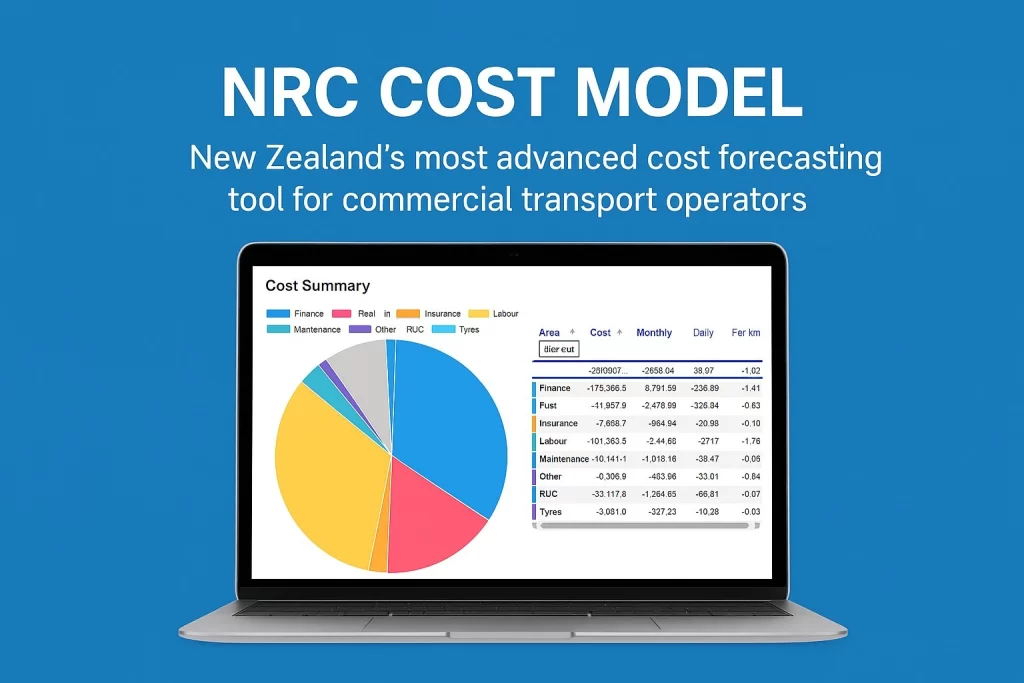
Transport Cost-Model Tool: Calculate accurate distance or weight-based costs to ensure your margins remain protected.
Cost Model Tool
Infometrics Transport Cost-Index: A customisable tool to help you understand how underlying cost changes impact your specific business model.
Cost-Index
Need Expert Advice? Our team are standing by to help you navigate operational hurdles. Call us on 0800 686 777.